By Sharon Whitley Larsen
RIO DE JANEIRO, Brazil - "You`re not going to Rio, are you?" several people asked me when I told them of a scheduled business trip there. "Don`t you realize that it has a reputation as one of the world`s most violent cities?"
I had heard about Rio`s high crime rate, mostly involving drug gangs. But I - who has walked the streets of many major international cities, including Cairo, Jerusalem, Athens, Rome and Mexico City - didn`t want to let it deter me from my first visit to South America. After all, I`m always cautious to use common sense in any major city I tour (yes, even in the United States), attempting to blend in with the locals and not flaunt any jewelry, expensive cameras or money.


And I`m glad that I didn`t listen to these well-meaning folks and flew Varig Brazilian Airlines to Rio anyway. I fell in love with this stunning, energetic city - perhaps the most gorgeous in the world - known for its landmark Christ the Redeemer Statue, samba music, flamboyant Carnival, 1940s film bombshell Carmen Miranda and "The Girl From Ipanema" (yes, she`s real!).
This is the city with the landmark, beachfront Copacabana Palace, built in 1923, the grande dame of hotels that has hosted jet-setters, celebs, royalty and politicians - including Christina Onassis, Mick Jagger, Princess Diana and Bill Clinton.
And I discovered that Rio is known for its fashion, arts and crafts, and inexpensive shopping and dining (how about $10 for a great entree in a fabulous restaurant?). Most important, I felt very safe.
"We have a bad image because people only hear the bad news," lamented Daniel Brandao, my tour guide. "When you compare us to other cities with the same population (6 million), the difference in the crime rate is not that high - it`s concentrated in a few areas. The country is changing politically and financially - it`s been very vulnerable financially the last few years, but it`s getting better. We have crime here, I don`t want to hide it, it`s a problem of society. But I`ve lived here since 1975 and I`ve never had a problem. I feel very safe here."
Sam and Bella Maheshwari, both 28, of Washington, D.C., on their first visit here (four days in Rio, 11 total in Brazil), agreed.
"We walked around together at night," Sam said, "and we never felt in danger. We were a little more cautious walking downtown, as we would be in any major city."
The couple sipped virgin caipirinhas (Brazil`s traditional drink, made with sugarcane rum, lime, sugar, crushed ice) in Copacabana`s Pestana Rio Atlantica hotel lobby bar. As they waited for a taxi to the airport, they said that their friends who had been here had highly recommended it as a vacation spot.
"Rio`s one of those places people are always fascinated by and interested in," said Bella, noting that they take one or two international trips each year. "We had a great time - from the warm, welcoming locals (known as Cariocas) to the night life - especially enjoying the impressive culture. It`s definitely one of the most ambitious trips and one of the most interesting that we`ve had."
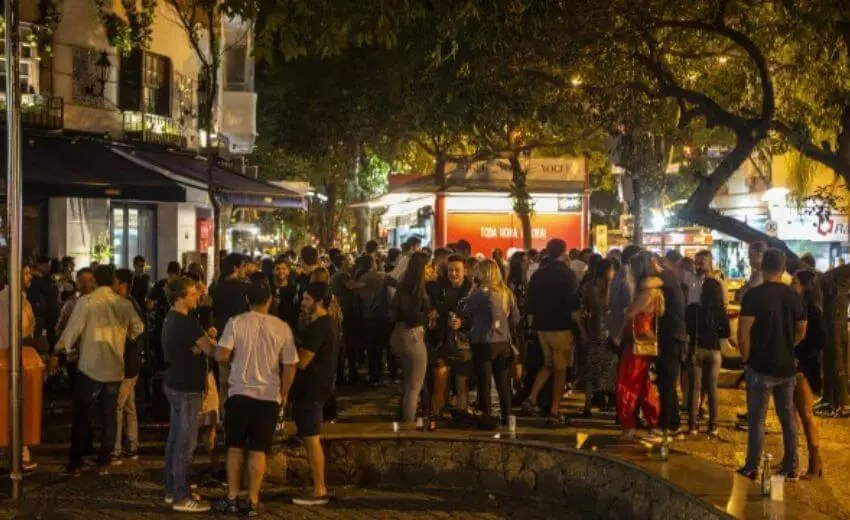
Besides touring the usual Rio tourist sites - like taking in the spectacular views from Sugar Loaf and Christ the Redeemer statue - the couple especially enjoyed the bars and clubs that featured live Brazilian music and dancing one night in the Lapa district, the old part of Rio that is under historical protection and that features restaurants and nightclubs that specialize in samba.
"We loved it in Lapa, one of the best nights we had," Sam said.
"The samba shows there were great, colorful, entertaining," Bella added. "There were all locals there except us. We`d love to come back here."
"We`ve found that many Americans are coming here for vacation instead of going to Europe," pointed out Elisabeth Paiva, a spokeswoman for the Rio Convention and Visitors Bureau, which notes that the numbers of international tourists are increasing each year.
Today Rio, which will host the 2007 Pan American Games, is visited annually by some 1.5 million foreigners, a quarter of those from North America. In fact, 40 percent of tourists visiting Brazil come here. The Iraq situation and terrorism fears - and the current weak U.S. dollar vs. the Euro and British pound - have lured some Americans to South America, where an exotic vacation of international flavor can cost much less.
"Rio`s like the crown jewel, like the dream destination," Brandao pointed out. "Many people - since they were kids - dreamed of going to Rio. And every year it`s getting better for tourism: We have lots from the U.S., as well as from other South American countries, and Europeans, mostly from Spain, Italy, Germany, the United Kingdom, Portugal, The Netherlands, Scandinavia."
And Rio`s local government seems to be making every effort to ensure tourists of safety: Well-lit areas, special Tourist Police teams and police mini-stations abound around the city, especially at the popular Copacabana and Ipanema beaches, where affordable first-rate hotels set up their own security tents, allowing the hotel guests who want to swim, stroll, sunbathe or surf to leave hotel keys and cameras with the staff for safekeeping.
On one sunny morning, Jonlyn Karr, who resides in California`s Silicon Valley, was finishing breakfast as she sat at the Pestana Rio Atlantica`s outdoor patio, overlooking Copacabana. Although she had been to Brazil years ago, she was on her first visit to Rio, a business trip. And she, too, admitted having concerns about crime.
"I had wanted to come here for so long," she said wistfully. "You have to be careful in any major city, and now that I`m here I don`t feel so threatened. I would absolutely come back here and spend more time."
IF YOU GO
Besides a passport, U.S. citizens need a visa for travel to Brazil. It costs $100 if you apply at a Brazilian Consulate office in person, or $110 if you order one by mail. For information on requirements: www.brazilian-consulate.org.
Pestana Rio Atlantica (5-star hotel), Av. Atlantica 2964, Copacabana,
www.pestanahotels.com.br , e-mail: rioatlantica@pestanarioatlantica.com.br , Rooms from about $150.
The best months to visit: June, July and August, when daytime temperatures are in the comfortable 70s. Don`t forget the mosquito repellent.
Although some people in the tourist areas speak English, many business Web sites are in Portuguese. And, in a pinch, most vendors and hotel bellmen will accept American dollars.
For more information: Rio Convention and Visitors Bureau
www.rioconventionbureau.com.br, e-mail: gerenciadeturismo@rcvb.com.br
Visit Brazil tourism office: www.braziltourism.org.
Sharon Whitley Larsen is a freelance travel writer.
Visit Copley News Service at www.copleynews.com.